What Collagen Is, Why Skin Loses It, and What a Mask Can Really Do
If a pillow crease now lingers past breakfast, or your cheeks don't spring back the way they used to, you're watching collagen at work. More precisely, you're watching collagen that has quietly started clocking out early. Here's what that protein actually is, why your skin makes less of it every year, and what a collagen product can honestly do about it.
What collagen actually is
Collagen is the most abundant protein in the human body, roughly a third of all the protein you have. In your skin, it's the main building material of the dermis, the living layer beneath the surface, where it makes up around three quarters of the skin's dry weight.
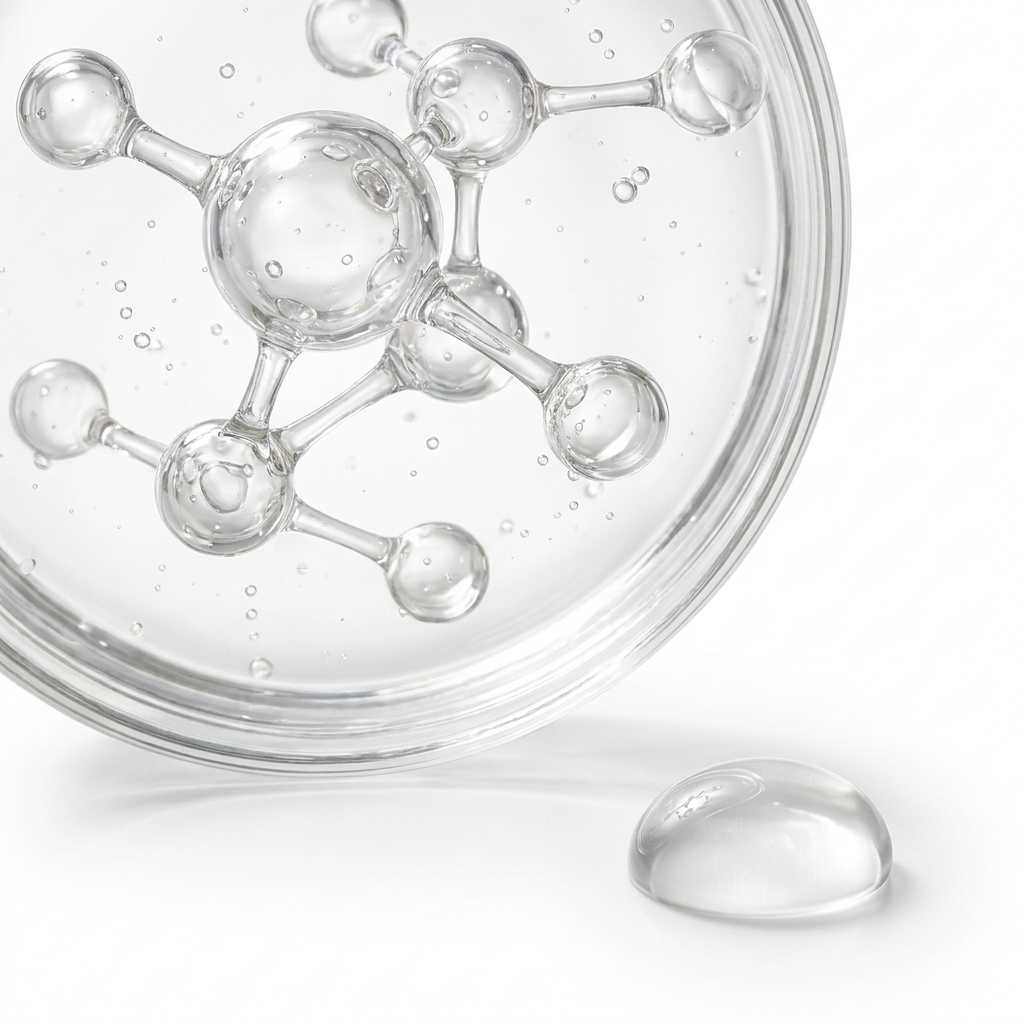
Picture a mattress. Collagen is the network of springs: long, rope-like fibers wound in a triple helix that give skin its density and its push-back. Elastin lets skin stretch and return. Hyaluronic acid holds water between the fibers. But collagen is what holds the shape.
Two types do most of the work in skin:
- Type I, about 80% of skin's collagen, forms the thick, strong fibers.
- Type III, around 15%, is finer and more flexible. It's often called baby collagen because young skin has proportionally much more of it, and it's one of the first to decline.
Why skin loses it, and why the loss speeds up
Your body starts making less collagen in your mid-twenties. A commonly cited estimate is about 1% less each year. At 30, you'd never notice. By 50, it's a quarter-century of compounding, and a few forces push it faster:
- Hormones. Estrogen helps keep collagen production running. Studies of women after menopause found skin can lose close to 30% of its collagen in the first five years, then roughly 2% a year after that.
- Sun. UV light triggers enzymes that break collagen fibers apart. Much of what we call visible aging is really accumulated sun.
- Sugar. Through a process called glycation, sugar molecules bind to collagen fibers and leave them stiff and brittle instead of springy.
- Smoking and short sleep. Both raise oxidative stress and slow the skin's overnight repair.
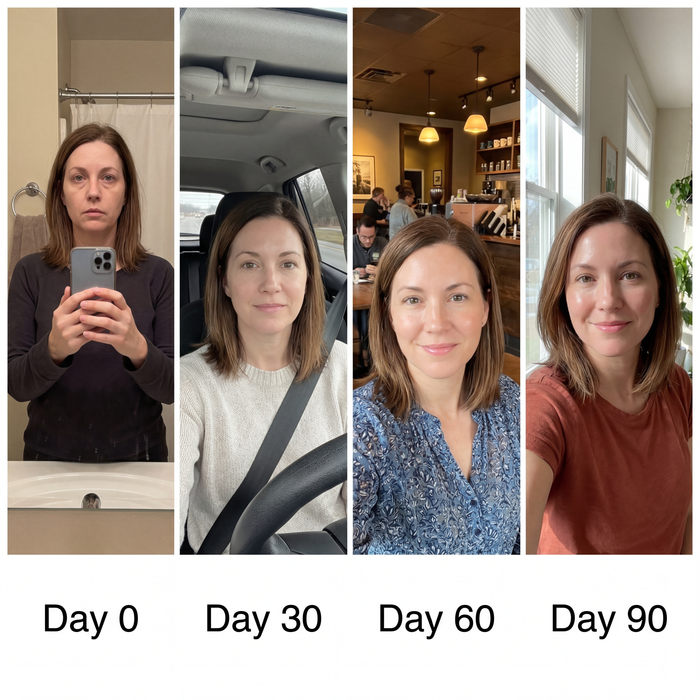
The result is skin that's thinner, drier, and slower to recover. Lines that used to appear only when you smiled start staying put. That's the feeling so many women describe as skin that simply doesn't bounce back.
What topical collagen can realistically do
Let's be clear about the ceiling first. No cream or mask pours new collagen fibers into your dermis. Intact collagen is an enormous molecule, around 300,000 Daltons, and the skin's outer barrier generally lets through only molecules under about 500 Daltons. That's why the word "collagen" on a label tells you very little on its own. Size, source, and amount decide what happens next.
Here's what well-made topical collagen can do:
- Plump with water, within hours. Collagen is a powerful humectant. It holds moisture at the surface, so fine lines look softer and skin looks fuller the same evening.
- Get past the surface. Hydrolyzed collagen, broken into fragments under 500 Daltons, is small enough to travel where intact collagen can't.
- Send a signal. Collagen hydrolyzed from soy carries isoflavones, plant compounds studied for the way they speak to skin, including the signaling that fades after menopause.
- Speak your skin's language. Human-identical Type III collagen, grown by fermentation rather than taken from fish or cows, matches the structure your skin already recognizes as its own.
Hydration shows up the same night. Firmness is something you build with regular use. Anyone who promises the reverse is selling something else.
How to choose a collagen product that earns its place
- Ask for the number. Most products say "with collagen" and stop there. A real percentage tells you whether collagen is the formula or a garnish.
- Look for the form. Hydrolyzed or low-molecular-weight collagen is the kind built to get in.
- Choose a format that stays. A cream is rubbed in and gone in minutes. A hydrogel mask holds its ingredients against your skin for hours, and time on skin is half the equation.
- Protect what you still have. Every product works better on skin that isn't losing collagen to daily sun.
SkinKlean tip: The cheapest collagen strategy is the one that keeps yours from breaking down. A broad-spectrum SPF 30 every morning, including cloudy days and car rides, protects the collagen you make so everything you add has something to build on.
Our Triple Collagen Plumping Gel Mask was built around exactly these rules: 11.76% hydrolyzed collagen, more than any other mask we know of, in three forms with three different jobs, held against your skin in 34 grams of hydrogel for one to three hours. If your skin has stopped bouncing back, it's a smart place to start.