Airplanes and Your Skin: A Direct Flight to Dryness
You board with rested skin and land four or eleven hours later with a face that feels two sizes too small: tight across the cheeks, puffy under the eyes, and lined in places that looked smooth at the gate. It is not your imagination, and it is not the lighting in the arrivals hall. An airplane cabin is one of the driest places your skin will ever spend time.
Why the cabin dries you out
At cruising altitude, the outside air holds almost no moisture, and that is the air feeding the cabin. On a long flight, humidity typically falls to between 10 and 20 percent, drier than most deserts. Your skin is most comfortable at 40 to 60 percent.
Skin constantly releases water into the air around it, and the drier that air, the faster it goes. Hour by hour, the outer layer gives up its moisture, and dehydrated skin looks duller, feels tighter, and shows fine lines more clearly. Mature skin, which already holds less water and repairs its barrier more slowly, feels it first.
It is not only dryness
- Puffiness. Sitting still for hours slows circulation, and salty airline snacks encourage your body to hold on to water. Most of it settles in your ankles, and some settles under your eyes.
- Lower pressure. Cabins are pressurized to the equivalent of 6,000 to 8,000 feet. Slightly less oxygen plus a long travel day adds up to a gray, tired look.
- UV at the window. There is less atmosphere filtering sunlight at altitude, and aircraft windows block most UVB but not all UVA. If you have the window seat on a daytime flight, wear sunscreen or lower the shade.
- Wine and coffee. Both are dehydrating, and both are harder to turn down when you are bored at 35,000 feet.
Before you fly
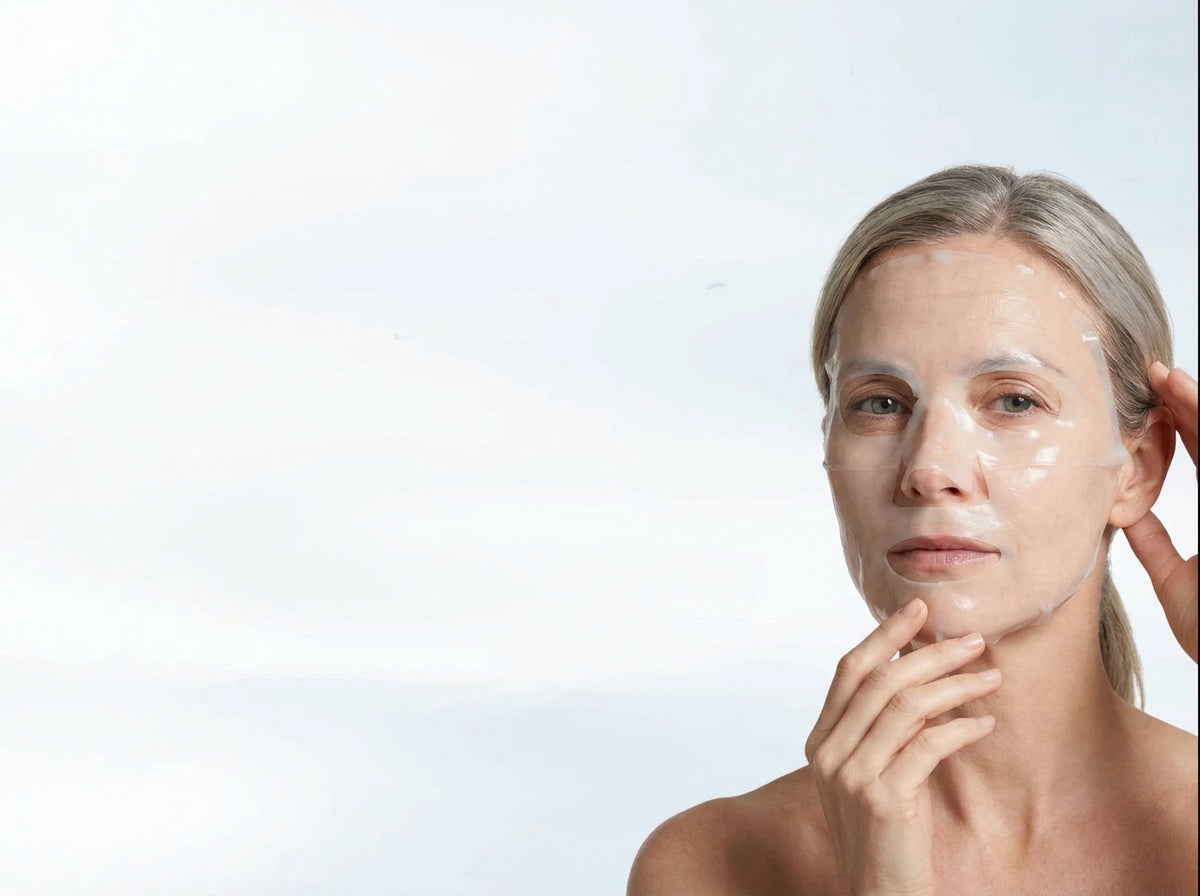
Hydrate the night before, not the morning of. Give your skin a long drink with a hydrogel mask for one to three hours the evening before your flight, then apply a rich moisturizer on top. You will board with your water reserves already in place. On travel day, go light on makeup. Foundation and powder soak up what little moisture your skin has and tend to settle into lines by the time you land.
In the air
- Moisturize once you are seated. A rich cream on a clean face, plus sunscreen if you are by the window.
- Drink a cup of water every hour or so, and go easy on the wine.
- Rethink the facial mist. A water spray evaporates within seconds in cabin air. If you love it, press moisturizer on right after so the water has somewhere to stay.
- Take care of your eyes. Eye patches are the discreet in-flight option. They take 30 minutes and target puffiness where it shows most.
- Walk the aisle every hour or two. It helps circulation, swollen ankles, and a puffy face.
- Reapply moisturizer halfway through any flight longer than four hours.
SkinKlean tip: Pack your masks in your carry-on, not your checked bag. Your recovery ritual is then within reach the moment you walk into the hotel room, even if your suitcase took a different flight.
After you land: the recovery ritual
This is the step most travelers skip, and it is the one that decides how you look at dinner or the next morning.
- Cleanse. Wash off the cabin air, the sunscreen, and the day with a gentle cleanser and lukewarm water.
- Mask for one to three hours. Put on a hydrogel mask while you unpack, call home, or put your feet up. Three hours is the full treatment, and if jet lag wins and you fall asleep in it, consider that a bonus.
- Seal. Moisturizer over the top. If the hotel air feels dry, set a glass of water or a damp towel near the bed.
- Sleep on your back with an extra pillow, so fluid drains overnight and you wake up less puffy.
Travel will always ask something of your skin. With a little planning, it does not have to show on your face.
Our Triple Collagen Plumping Gel Mask slips flat into any carry-on and was made for exactly this kind of recovery: 34 g of hydrogel with 11.76% hydrolyzed collagen, more than any other mask we know of, plus 15% glycerin and dual hyaluronic acid to put back what 35,000 feet took out. Pair it with our Peptide Caffeine De-Puffing Eye Patches during the flight, and you can step off the plane looking like you slept the whole way.