While You Sleep, Your Skin Recovers (Or Doesn't, Depending on You)

By 10 p.m., your skin has spent the whole day on defense: sun, dry office air, wind, and the screen you have been squinting at since breakfast. Night is when it finally switches from protecting to rebuilding. How well that shift goes depends less on luck than on what you do in the two hours before you turn off the light.
Your skin works a night shift
Skin runs on the same internal clock as the rest of your body. During the day, its priority is defense. At night, the priorities change. Blood flow to the skin rises, cell renewal picks up, and cortisol, the stress hormone that works against collagen, falls to its lowest point of the day. Growth hormone, which supports tissue repair, is released mostly during deep sleep.
There is a catch. The evening is also when your skin loses the most water. The barrier is more permeable at night, so moisture escapes faster, especially in a heated or air-conditioned bedroom. That is why you can go to bed with comfortable skin and wake up tight and dull, with lines that look deeper than they did at dinner.
What short nights actually do
This is more than folk wisdom. In a study from University Hospitals in Cleveland, women aged 30 to 49 who slept poorly showed more signs of skin aging, including fine lines, uneven tone, and reduced elasticity, than good sleepers of the same age. Their skin also recovered more slowly after its barrier was disrupted.
After 45, it matters even more. Collagen production slows every year, skin holds less water, and the barrier takes longer to bounce back. A short night you would have shaken off at 30 now shows up by morning as puffiness under the eyes, a grayish tone, and a pillow crease that lingers until lunch.
An evening routine that works with the night shift
- Cleanse early, and gently. Wash your face soon after dinner instead of at midnight. Use a gentle cleanser and lukewarm water; hot water strips the oils your barrier needs to get through the night.
- Give your skin a long drink. This is where a hydrogel mask earns its place. A cream sits on the surface for a few minutes before it is absorbed or rubbed off on the pillow. A mask stays sealed against your skin for as long as you wear it. One to three hours is the range, and three is the full treatment. Put it on while you read, watch a show, or talk on the phone.
- Seal it in. When the mask comes off, press your usual moisturizer or night cream over the top. You are locking the water in before the night's biggest losses begin.
- Bring your neck along. Neck skin is thinner than facial skin, with fewer oil glands, and it is often where the years show first. Whatever goes on your face should go there too.
- Put the phone down 30 to 60 minutes before bed. Late scrolling delays sleep, and the deep stages of sleep are where most of the repair happens.
Set up your bedroom for your skin
- Humidity. Aim for 40 to 50 percent. A small humidifier by the bed makes a real difference in winter and in air-conditioned rooms.
- Pillowcase. Silk or satin creates less friction than cotton, and cotton soaks up both moisture and night cream. Change it at least once a week.
- Sleep position. Pressing the same side of your face into the pillow every night can etch sleep lines over time. If you can, start the night on your back.
- A little elevation. An extra pillow helps fluid drain, so you wake up less puffy.
- A cool, dark room. Around 65 degrees Fahrenheit helps most people fall asleep faster and stay in deep sleep longer.
SkinKlean tip: Put your mask on right after you cleanse, around 8 or 9 p.m., and take it off when you head to bed. Three hours fits neatly into an evening, and you still get to sleep with nothing on your face. If you do doze off in it, no harm done: overnight is a bonus, never a requirement.
What you will notice in the morning
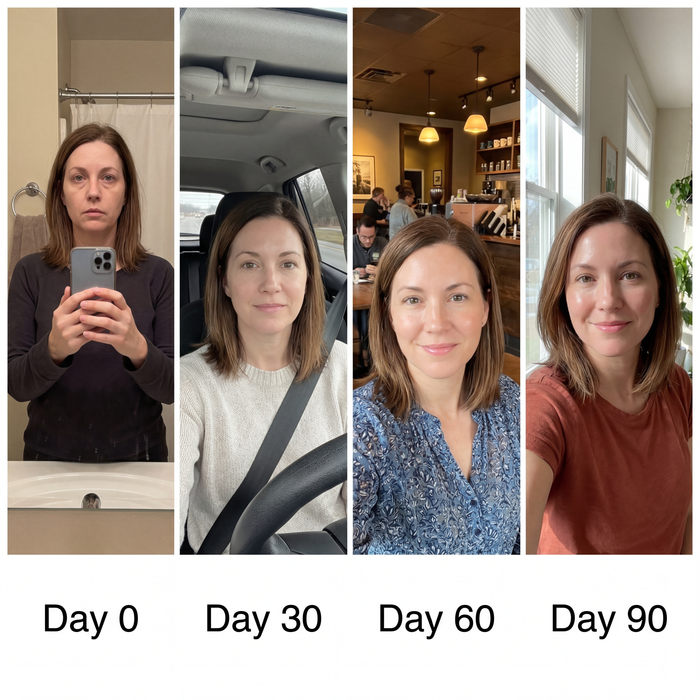
Well-hydrated skin reflects light more evenly, so it looks brighter. Water plumps the outer layers, which softens the look of fine lines. And skin that held on to its moisture overnight does not feel tight the moment you wash it. None of this takes a 12-step routine. It takes a few simple steps, done at the right time, most nights of the week.
For the long-drink step, our Triple Collagen Plumping Gel Mask was made for exactly this window. Each mask is 34 g of hydrogel in two pieces, with 11.76% hydrolyzed collagen (ask any other mask for their number), 15% glycerin, and two kinds of hyaluronic acid. Three collagens do three jobs: one small enough to get in, a human-identical Type III "baby collagen," and a collagen extract that plumps tonight. The gel turns from white to clear as it works, so by bedtime you can see it has done its part.